Agentic AI
The one-sentence version: a normal AI answers — an agentic AI gets things done. You give it a goal, and it figures out the steps, uses tools, checks its own work, and keeps going until the goal is met.
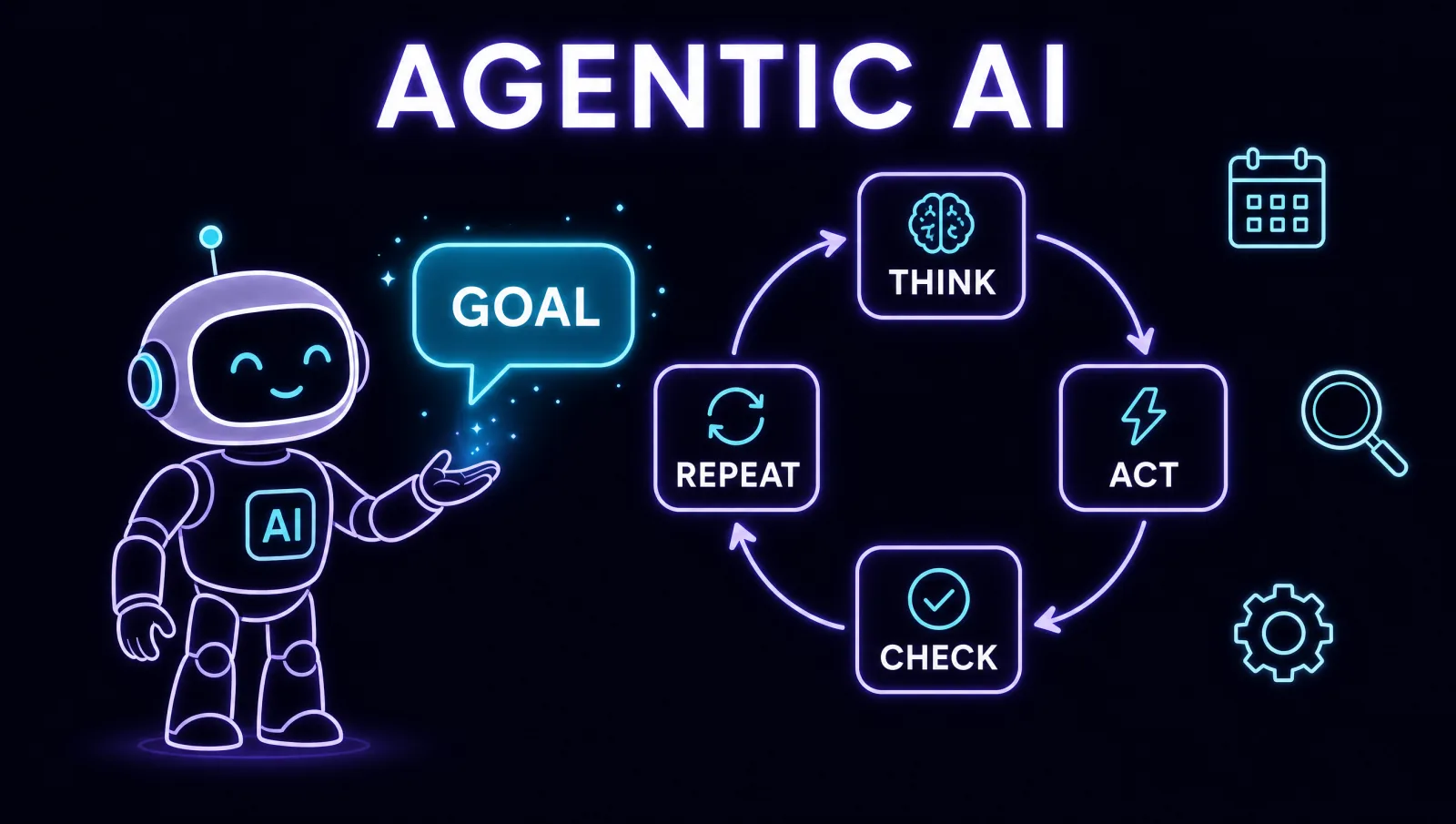
The analogy — a vending machine vs. an intern
A regular chatbot is a vending machine: put in a question, a snack pops out. One shot, done. An agentic AI is a new intern: say “Plan the office party,” and they make a to-do list, book the room, order pizza, text everyone, and come back when it's finished.
The loop that makes it "agentic"
The key idea: agents need tools to actually do things in the real world. That's exactly where APIs and MCP come in. 👇
Want the code behind this loop? The Week 1 deep dive takes it apart line by line and runs it live in your browser.
API Calls
Theory: an API (Application Programming Interface) is a messenger that lets two pieces of software talk using agreed-upon rules. An API call is one round-trip: you send a request, you get back a response.
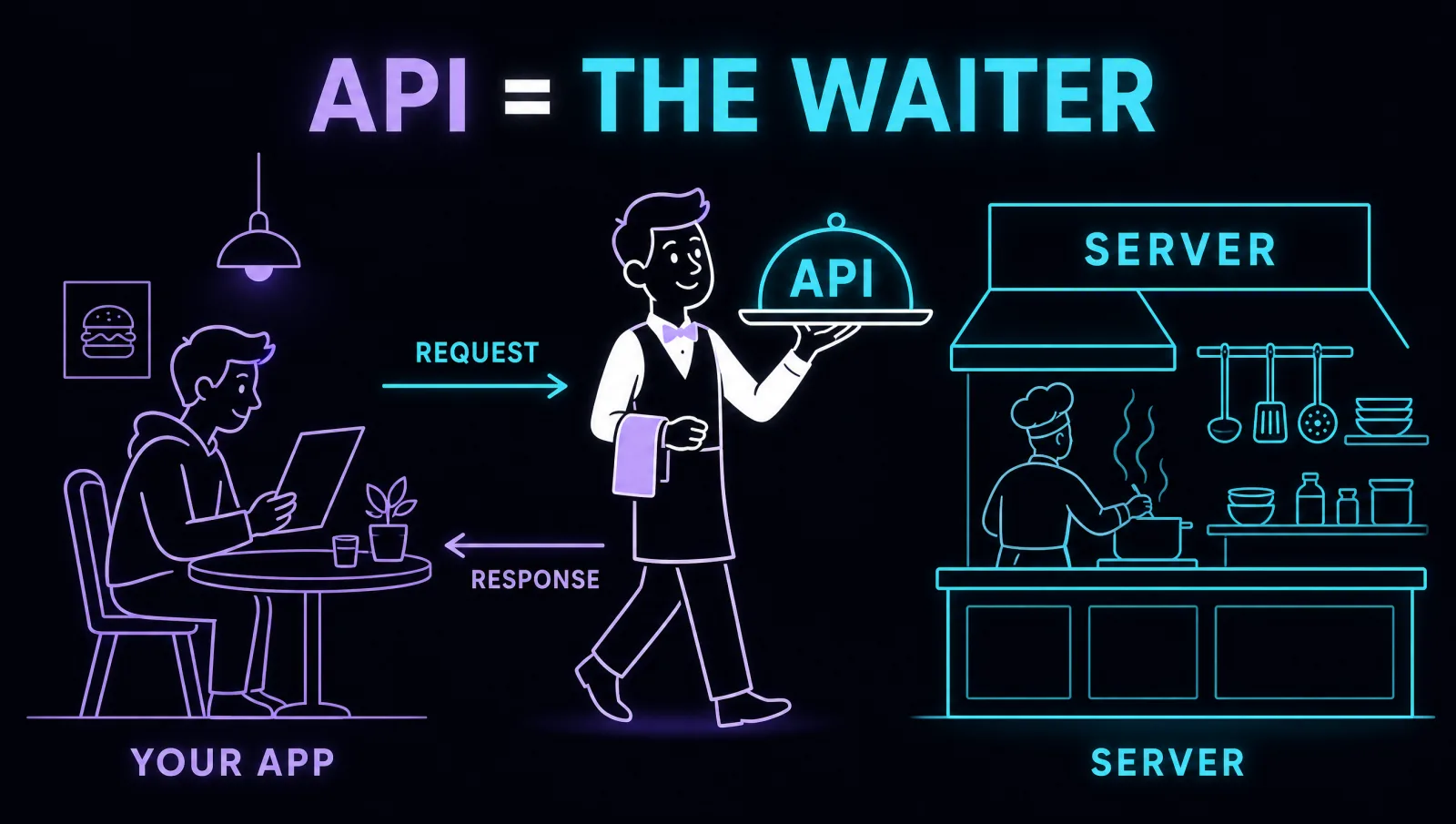
The analogy — a waiter at a restaurant
You (your app) are the customer. The kitchen is a giant server you can't walk into. The API is the waiter: you give your order (the request); the waiter brings your food (the response). You never need to know how the kitchen cooks — just how to order.
A real example — weather
Your weather app doesn't own a satellite. It makes an API call:
REQUEST:   GET weather for Austin, TX

RESPONSE:  { "temp": 98, "sky": "sunny", "humidity": 40 }
The reply comes back as tidy data (usually JSON, like above). Every refresh is another API call. You already use them constantly: “Log in with Google,” a live game leaderboard, or Google Maps inside Uber — all API calls.
On the Build It page you'll create this exact weather API yourself in 6 lines.
MCP — Model Context Protocol
Theory: MCP is a universal standard that lets an AI connect to tools, apps, and data — all in the same way. Instead of a custom connection per tool, MCP gives every tool one shared plug shape.
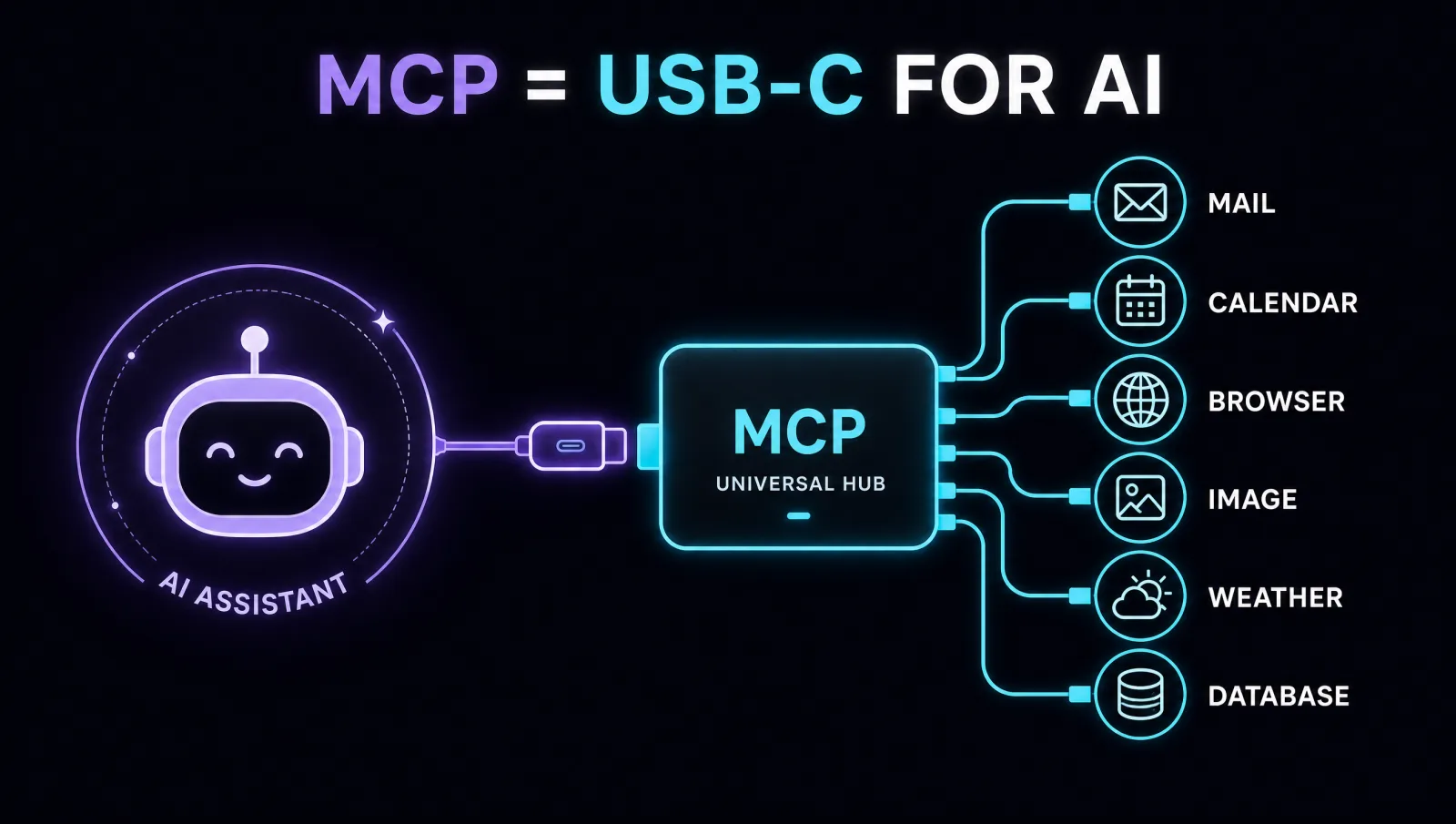
The analogy — USB-C
Remember when every phone had a different charger? Then USB-C arrived — one plug for laptop, phone, headphones, monitor. Before MCP, every AI-to-tool link was a custom cable (Gmail? build one. Calendar? build another). With MCP, tools expose themselves through one standard port, so any MCP-speaking AI plugs in instantly. Build it once, works everywhere.
API vs MCP
They're not rivals — MCP usually uses APIs underneath. But they solve different problems.
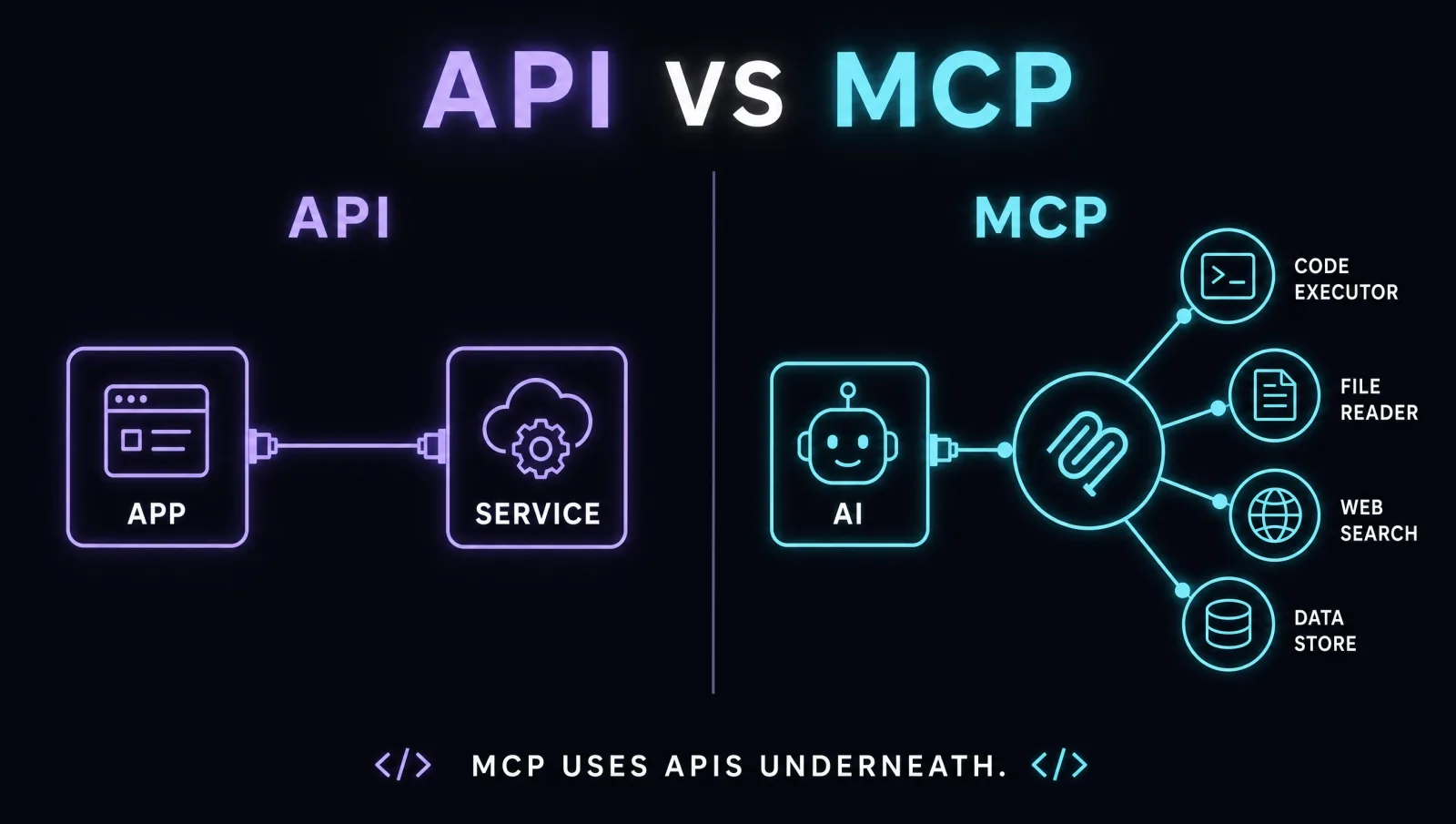
| API | MCP | |
|---|---|---|
| What it is | A messenger between two specific programs | A universal standard connecting AIs to many tools |
| Analogy | A waiter for one restaurant | USB-C — one plug for everything |
| Built for | Software talking to software | AI models talking to tools |
| Effort | Custom-built for each pairing | Build once, works with any MCP AI |
| Who "speaks" it | Developers writing code | The AI model itself, on the fly |
Set One Up & Watch It Work
No coding required to start. Three tiers, easiest first.
🥇 Easiest — watch an agent + MCP right now (0 setup)
Open any modern AI assistant (like Claude) and ask:
"Search the web for today's top science headline,
 then make me an image about it."
Watch it think (plan) → call a web tool via MCP → call an image tool via MCP → hand you the result. That chain — goal → tools → result — is an agent using MCP. You just watched it. 🎉
🥈 See a raw API call with your own eyes (~2 min, no code)
- Paste this into your browser:
https://official-joke-api.appspot.com/random_joke - Hit Enter. The raw JSON response appears — exactly what an app receives from an API call.
- Refresh a few times — each refresh is a new API call returning new data.
🏆 Build your own API + MCP + agent (~20 min)
Ready to make all three yourself, with one small weather example that threads through every step? That's the whole next page.
📌 Recap in one breath
- Agentic AI — give it a goal; it plans, uses tools, and checks itself in a loop.
- API call — a waiter carrying a request/response between two programs.
- MCP — USB-C for AI: one universal way to plug an AI into many tools.
- API vs MCP — a specific door vs. a universal door frame (MCP often uses APIs behind the scenes).